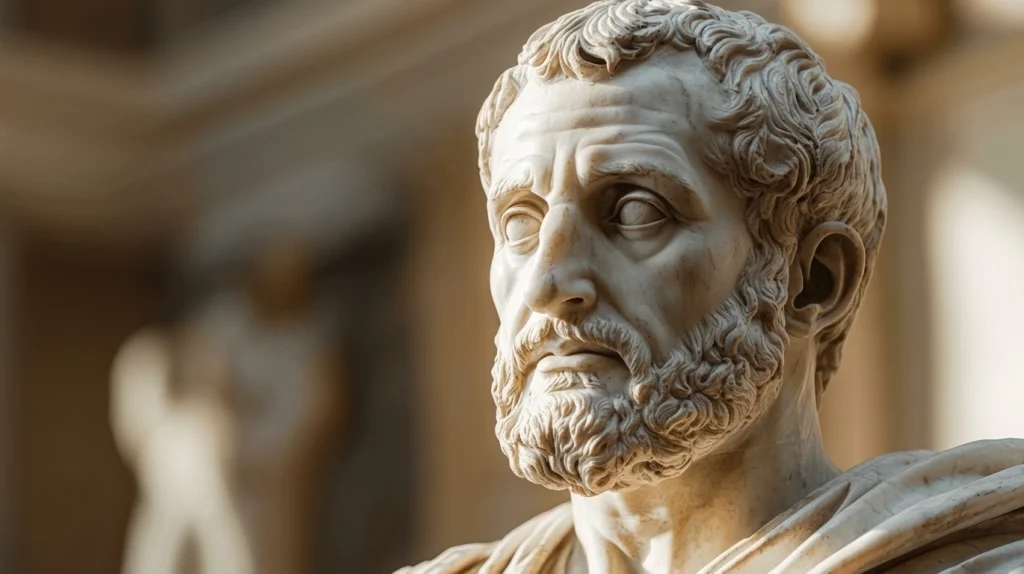

The Future Belongs to Human-Centred Communicators
There is a quiet revolution happening in boardrooms, classrooms, courtrooms, and conference halls around the world. It is not loud. It does not arrive with fanfare. But it is reshaping who gets heard, who gets followed, and who gets remembered.
The revolution is this: in an era of algorithmic content, AI-generated text, and digital noise so thick you could cut it with a blade, the communicator who chooses to remain deeply, irreducibly human is becoming the most powerful person in any room.
The future, it turns out, does not belong to the most automated. It belongs to the most human.
The Noise Problem
We are producing more content than at any point in human history. Every minute, the world uploads hundreds of hours of video, sends billions of messages, and publishes thousands of articles. Language models churn out prose at industrial scale. Decks are generated in seconds. Emails are drafted by AI and sent by humans who barely read them.
And yet people feel less understood than ever.
This is the central paradox of our communication age. We have more channels, more words, more reach, and less resonance. The sheer volume of communication has made genuine connection rarer and therefore more precious. It has also exposed a fundamental truth that no technology can paper over: communication is not primarily an information-delivery system. It is a human act.
When someone listens to a speaker and feels a chill run down their spine, that is not data transfer. When a leader delivers difficult news and their team leaves the room feeling respected rather than diminished, that is not a transaction. When a negotiator reads the tension in a room and pivots the conversation with a single well-chosen question, that is not a script. These are moments of human-centred communication and they are the moments that change organisations, careers, and lives.
What “Human-Centred” Actually Means
The phrase “human-centred communication” is increasingly popular, which means it is also increasingly misunderstood. It is not a synonym for being warm, gentle, or agreeable. It is not a style preference. It is a philosophy and a rigorous one.
Human-centred communication places the receiver at the heart of every communicative decision. It asks, before anything else: Who is this person? What do they need to hear? How do they need to hear it? What is at stake for them in this conversation?
It is the opposite of ego-driven communication, where the speaker’s primary concern is how they appear, how impressive they sound, or whether their slides are beautiful. It is also the opposite of content-driven communication, where the speaker is so captivated by their own material that the audience becomes an afterthought.
Human-centred communicators operate from a different premise entirely. They understand that words land differently depending on who catches them. They know that the same message, delivered in the same words, can inspire one person and alienate another and that this is not a flaw in the audience. It is a feature of communication itself.
To be human-centred is to take that reality seriously. It is to do the harder work: to adapt, to listen, to hold space, to adjust in real time, to resist the temptation of the prepared script when the room is telling you something different.
The Three Pillars of Human-Centred Communication
1. Deep Listening: The Lost Superpower
If there is one skill that separates extraordinary communicators from everyone else, it is listening. Not polite listening, where you wait for your turn to speak while composing your next sentence. Not strategic listening, where you scan for keywords that confirm what you already believe. Deep listening the kind that is full-bodied, patient, and genuinely curious.
Deep listening is rarer than we admit. Studies on interpersonal communication consistently show that most people retain only a fraction of what they hear in any given conversation. We are listening to respond, not to understand. We are listening to our own internal monologue as much as to the speaker in front of us.
The human-centred communicator breaks this pattern. They listen to what is said, but also to what is not said. They notice hesitations. They catch the slight shift in energy when a topic becomes sensitive. They register when enthusiasm rings hollow or when reluctance conceals something important. They treat listening not as a passive act but as an active, demanding practice.
This kind of listening changes everything. It changes what you say next. It changes how the other person feels. It builds the rarest commodity in professional life: trust. When someone truly feels heard not summarised, not managed, but heard they become more open, more honest, and more willing to engage. The listener has, paradoxically, become the most powerful person in the exchange.
For leaders, this is particularly consequential. An executive who is known for listening deeply will receive better information than one who broadcasts. They will surface problems earlier. They will retain talented people who, everywhere else, feel invisible. They will make better decisions because their inputs are richer.
Listening is not a soft skill. It is a strategic one.
2. Emotional Intelligence: Reading the Room at Scale
Emotional intelligence in communication is the ability to perceive, interpret, and respond to the emotional landscape of a conversation or audience. It is not the same as being emotional. It is the capacity to recognise emotions in yourself and in others and to factor that recognition into how you communicate.
For a human-centred communicator, emotional intelligence is not a background competency. It is front and centre. Every significant conversation has an emotional subtext, and the communicator who ignores that subtext does so at their peril.
Consider a leader who needs to communicate a strategic pivot to their team one that will mean hard work, disruption, and uncertainty. A content-centred communicator prepares data, builds a logical case, and delivers the facts clearly. The team understands what is happening. But they leave anxious, unsettled, and quietly resistant, because their emotional reality was never acknowledged.
A human-centred communicator does something different. Before presenting the logic, they name the experience: “I know this is a significant shift, and I imagine some of you have questions maybe concerns that go beyond what’s on these slides. That’s completely legitimate, and I want to make space for that.” In one breath, they have changed the emotional climate of the room. Defences come down. Ears open. The rational content that follows now has a chance of actually landing.
This is not manipulation. It is recognition. It acknowledges that human beings are not information-processing machines. We are feeling creatures who also think, and we communicate best when both dimensions are engaged.
Emotional intelligence at scale the ability to read not just one person but an entire audience is the hallmark of truly exceptional public speakers and leaders. It explains why some presenters hold a thousand people in absolute silence while others with identical content lose the room in minutes. The emotional reading is happening in real time, and the great communicator is responding to it, adjusting tone, pace, emphasis, and approach based on what the audience’s energy is telling them.
3. Authentic Presence: The Quality That Cannot Be Faked
Authenticity is the most abused word in modern leadership discourse. It has been co-opted by brand strategists, packaged into workshop modules, and reduced to a series of behaviours you can perform to appear genuine. The irony is excruciating.
True authenticity in communication is not a performance. It is the quality of being fully present bringing your actual self, with its convictions, uncertainties, and humanity, into contact with the person or people you are communicating with. It requires a kind of courage, because authentic presence means being visible. It means your audience can see not just your polished surface but the real intelligence, the real conviction, the real care underneath it.
The communicators who have shaped history who have moved people to action, changed minds, and built lasting trust have all had this quality. Think of the leaders whose words you have carried with you, perhaps for years. There was something about them that felt real. Not rehearsed. Not performed. Real.
This is why you cannot outsource authentic presence to AI. You can use AI to research your audience, structure your argument, or sharpen your language. But the moment you step in front of people, the most important thing you bring is yourself. Your lived experience. Your genuine perspective. The things you actually believe. The willingness to say something real rather than something safe.
Authentic presence is also expressed in the body. Voice, posture, eye contact, the quality of stillness or movement these carry meaning that words alone cannot convey. A human-centred communicator understands this. They know that people are always receiving two messages simultaneously: the one you are saying and the one your body is broadcasting. When these align when voice, language, and physicality are congruent the result is an authority that no deck or polished phrase can manufacture.
Why This Matters More Now Than Ever Before
The AI Inflection Point
We are at the beginning of a profound shift in what automated systems can do with language. AI can now write persuasively, summarise accurately, generate reports, draft speeches, and simulate empathy. For many organisations, the temptation is to automate as much communication as possible.
This is both understandable and potentially catastrophic.
The risk is not that AI will replace communicators. The risk is that organisations will mistake AI-generated content for genuine communication and in doing so, erode the very thing that makes communication powerful: the human relationship it builds.
Audiences are becoming more sensitive to this erosion, not less. They can feel the difference between a message written by a person who cares and one assembled by an algorithm. The former lands. The latter is skimmed and forgotten. As AI-generated content floods every channel, the human communicator the one who shows up with real presence, real listening, and real care will stand out not just as better, but as different in kind.
This is not an argument against using technology. It is an argument for knowing what technology cannot do, and making sure that the irreplaceable human dimensions of communication are never delegated away.
The Loneliness Economy
There is growing evidence that many of us are experiencing a crisis of genuine connection. Despite unprecedented access to communication platforms, rates of loneliness and disengagement are rising across demographic groups. In the workplace, employee disengagement remains stubbornly high in survey after survey, costing organisations billions in lost productivity and turnover.
The root cause is not access. It is quality. People do not need more messages. They need messages and messengers who actually see them.
Human-centred communicators fill this gap. A manager who practises deep listening makes their team members feel genuinely valued. A leader who communicates with authentic presence gives their organisation something to orient around not a brand or a strategy, but a person. A colleague who takes time to understand another’s perspective before advocating their own becomes, in any collaborative environment, indispensable.
In a lonely economy, connection is the scarcest resource. Human-centred communicators have the skill to create it.
The Complexity Premium
The challenges facing organisations, communities, and societies are increasingly complex. Climate change, geopolitical shifts, technological disruption, demographic transformation these are not problems with clean solutions. They require collaboration, nuance, and the ability to hold multiple perspectives without collapsing into either paralysis or false certainty.
Communicating in conditions of complexity is extraordinarily difficult. It requires the ability to simplify without distorting, to inspire without misleading, to hold people’s anxiety without dismissing it, and to maintain conviction while staying genuinely open to being wrong. These are precisely the capacities that human-centred communication develops.
The leaders who will guide organisations through the coming decades of disruption will not be those who project the most confidence or have the most polished messaging. They will be those who can communicate honestly in uncertainty, who can build trust without making promises they cannot keep, and who can hold a diverse group of people together around a shared sense of direction. Human-centred communication is not one of the skills these leaders will need. It is the foundation on which all other leadership capacities rest.
Common Misconceptions
“Human-centred communication is about being nice.”
No. It is about being effective. Human-centred communicators can be direct, challenging, and uncomfortable to listen to. What they do not do is use bluntness as a substitute for care, or mistake harshness for honesty. The best feedback many people have ever received was challenging and deeply kind at the same time. That combination rigour held in warmth is a signature of human-centred communication.
“It’s only relevant for leaders and speakers.”
Wrong. Every conversation you have, every email you send, every meeting you contribute to is shaped by how human-centred your communication is. An analyst who writes reports that genuinely anticipate the reader’s questions. A junior colleague who checks in with a struggling teammate before sending a Slack message. A student who listens to understand rather than to score points in debate. Human-centred communication is relevant wherever humans communicate, which is everywhere.
“You either have it or you don’t.”
Absolutely not. Every component of human-centred communication is a learnable skill. Deep listening can be practised. Emotional intelligence can be developed. Authentic presence can be cultivated. These are not innate gifts they are disciplines, and like all disciplines, they respond to deliberate practice and skilled coaching.
“It takes too much time.”
The opposite is true. Human-centred communicators save enormous amounts of time because they do not have to spend energy undoing misunderstandings, repairing damaged relationships, or repeating messages that did not land the first time. The investment of care and attention in the front end of communication pays compounding returns.
Developing Human-Centred Communication: A Practitioner’s Path
The path to becoming a human-centred communicator is not a weekend workshop. It is a sustained practice. But there are specific disciplines that consistently accelerate development.
Practise intentional listening. In your next significant conversation, commit to making no counterargument, offering no advice, and forming no response until the other person has fully finished and then ask one clarifying question before you speak. Do this consistently for a month and observe what changes.
Seek feedback on how you land, not just what you say. Most people receive feedback on the content of their communication. Far fewer seek feedback on how they made someone feel during the exchange. Ask trusted colleagues: “When I gave you that feedback, how did you experience it? Was there a moment where something shifted for you?” This kind of feedback is the most actionable you will ever receive.
Study your best communicators. Who in your life communicates in a way that makes you feel genuinely understood? What, precisely, do they do? Observe it. Name it. Try to replicate it with intention.
Work on your physicality. Take a course in voice. Practise speaking to a camera and watch yourself back. Get coaching on your physical presence. The body is the first thing your audience receives, and it deserves at least as much attention as your content.
Put yourself in stretching situations. Speak at events where the stakes feel uncomfortably high. Have difficult conversations you have been postponing. Take on the briefing no one else wants. Growth in communication, as in almost everything, happens at the edge of your comfort zone.
Read widely and deeply. The communicator’s greatest asset is the depth and breadth of their understanding of human experience. Literature, history, philosophy, psychology these are not indulgences. They are the substance from which resonant communication is built.
A Word About Artificial Intelligence
There is no responsible treatment of this topic that ignores AI. So let us engage with it directly.
AI is already transforming communication practice. It is helping people research audiences, structure arguments, draft materials, prepare for difficult conversations, and analyse communication patterns. Used well, these applications are genuinely valuable. They handle cognitive load so that communicators can focus on what matters most.
But AI cannot replace the core of human-centred communication, and it is worth being clear about why.
The power of a great communicator is not in their output. It is in their presence. When you experience a genuinely extraordinary speaker, or sit across from a leader who makes you feel both challenged and believed in, what you are experiencing is a quality of aliveness attention, care, conviction, humanity that no algorithm can generate.
AI can write. It cannot be there. It can simulate empathy. It cannot feel it. It can approximate presence. It cannot generate it.
More importantly: the trust that human-centred communication builds is trust in a person. The CEO who communicates with authentic care creates loyalty that attaches to them and by extension, to the organisation they represent. That trust cannot be built by delegation to any system, human or artificial.
The communicators who thrive in the age of AI will be those who use the technology wisely to enhance and extend their reach, while investing deeply in the irreplaceable human capacities that no model can replicate.
The Stakes
Let us be honest about what is at stake.
Communication is not merely a professional skill. It is the means by which human beings create shared reality. Language is how we coordinate, how we care for each other, how we pass meaning across time and distance. The quality of our communication how honestly, carefully, and humanely we speak and listen shapes the quality of our relationships, our organisations, our communities, and ultimately our societies.
When communication becomes purely instrumental when it is optimised for efficiency at the expense of humanity something essential degrades. People become audiences to be managed rather than individuals to be engaged. Organisations become messaging machines rather than communities of purpose. Leaders become brand personas rather than human beings worth trusting.
The antidote is not to reject the tools of the modern communication landscape. It is to refuse to let those tools hollow out the humanity at the centre of what communication is for.
This is what Priori Orators was built to do. Not to manufacture slicker presenters or more polished spokespeople, but to develop communicators people who understand that the deepest power of their voice lies not in its volume or its eloquence, but in its genuine contact with another human being.
Closing: The Choice in Front of You
Every communicator alive today is making a choice, whether consciously or not.
The choice is between convenience and depth. Between reach and resonance. Between sounding impressive and actually connecting. Between delivering messages and changing minds.
The path of least resistance leads to more content, more automation, more surface, less meaning. That path is crowded, and it is getting more crowded every day.
The other path the one that requires slowing down, practising humility, doing the harder work of listening and adapting and showing up fully that path is not crowded. And at the end of it, you will find something that no algorithm will ever displace: a person that people trust, follow, and remember.
The future belongs to human-centred communicators.
The question is not whether you agree.
The question is whether you are willing to become one.
Priori Orators exists to help leaders, professionals, and emerging voices develop the communication skills that matter most. If this article resonated with you, explore our programmes, join our community, or reach out to begin your journey.