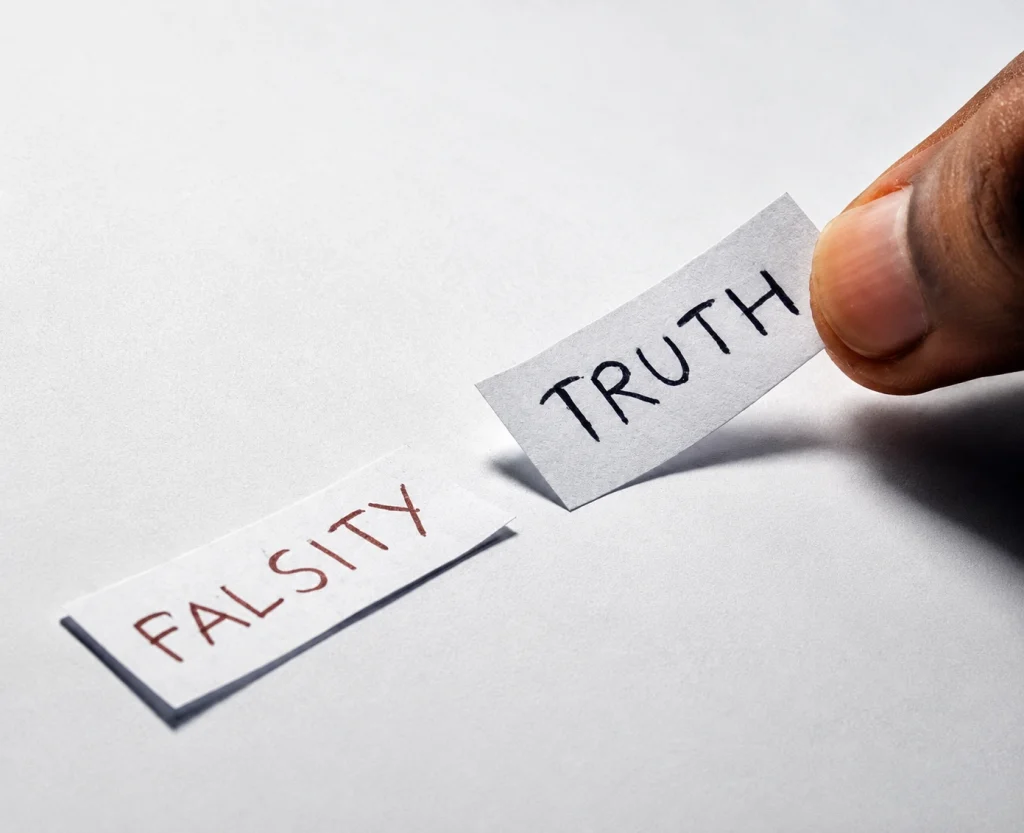

There are people who walk into a room and immediately appear to know what they are doing. They speak without hesitation, answer questions quickly and seem entirely comfortable occupying the space around them. Their posture is assured, their voice is steady and their opinions are delivered with conviction. Even before they have had the opportunity to demonstrate what they actually know, people often begin to assume that they know quite a lot.
Then there are others who are equally knowledgeable but less immediately impressive. They take a moment before answering. They think carefully about their words. They may qualify an opinion when the evidence is incomplete, ask questions before offering a solution or admit when they do not have all the information.
It is not difficult to guess which person is more likely to be perceived as confident.
What is more difficult is determining which person is more credible.
Confidence Is Visible. Credibility Takes Time.
The two are often treated as though they are interchangeable. In professional environments, confidence is frequently interpreted as evidence of competence. A person who speaks decisively is assumed to be knowledgeable. Someone who responds quickly appears intelligent. A leader who communicates with certainty seems to have a firm grasp of the situation.
Sometimes those assumptions are correct.
Sometimes they are not.
This distinction matters because confidence is visible, while credibility takes time to establish. We can observe confidence almost immediately. Credibility requires evidence. It develops through experience, consistency and the repeated demonstration that a person’s words can be trusted.
This is one of the more interesting challenges in communication. We spend considerable time teaching people how to appear confident, but perhaps not enough time asking what their confidence is actually built upon.
There is nothing wrong with confidence. In fact, a lack of confidence can prevent capable people from communicating their ideas effectively. A brilliant argument delivered with uncertainty can struggle to gain attention, while a mediocre argument delivered with conviction may receive far more consideration than it deserves.
This is partly because audiences, like all of us, use shortcuts when making judgements. We cannot always assess a person’s expertise immediately, so we look for signals. The clarity of their speech, their posture, their eye contact, the ease with which they answer questions and the certainty with which they express themselves can all influence our perception of their ability.
The problem is that these signals are not the same thing as competence.
A person can be extremely confident and completely wrong.
Another person can be cautious and exceptionally well informed.
The difference between the two is often invisible in the first few minutes of an interaction. That is why the ability to project confidence can be useful, but it should never be confused with the deeper work of becoming credible.
Performative Confidence vs Substantive Confidence
There is a form of confidence that is primarily performative. It is the confidence people can see and hear. It is expressed through a firm voice, decisive language, controlled body language and an apparent absence of hesitation. These qualities can be valuable, particularly when a speaker needs to communicate clearly under pressure. But they can also become a performance in which the appearance of certainty becomes more important than the substance behind it.
A speaker may learn to sound authoritative without developing the judgement required to make authoritative decisions.
A leader may become skilled at appearing decisive without becoming better at deciding.
An executive may learn how to command a room without necessarily earning the trust of the people in it.
This is where performative confidence eventually reaches its limits. It can create an impression, but impressions are tested over time.
Substantive confidence is different. It is less concerned with appearing certain and more concerned with being prepared. It comes from understanding the subject, considering the evidence, knowing the risks and having thought seriously about the consequences of a decision.
A person with substantive confidence does not need to pretend to know everything. They can acknowledge the limits of their knowledge without feeling that they have surrendered their authority.
In fact, the ability to say “I don’t know” can sometimes be one of the clearest signs that a person does know what they are talking about.
There is a considerable difference between saying, “I don’t know,” because you have not done the necessary work and saying it because you understand that the available evidence does not yet justify a definitive answer.
The first reflects a lack of preparation.
The second can reflect intellectual honesty.
The challenge for a speaker or leader is knowing the difference.
Why Leaders Feel Pressured to Sound Certain
This is particularly important in environments where people are expected to have answers. Senior executives are often placed under pressure to appear decisive. Managers are expected to reassure their teams. Experts are expected to provide certainty. Public speakers are expected to sound confident.
But the world is rarely as certain as professional communication sometimes makes it appear.
Markets change. Information is incomplete. Circumstances evolve. New evidence emerges. Even the most experienced leader will occasionally have to make decisions without knowing exactly how events will unfold.
The credible communicator does not pretend otherwise.
Instead, they are able to distinguish between what is known, what is uncertain and what they believe should happen next.
There is considerable confidence in being able to say, “This is what we know. This is what we do not know. Based on the information available, this is the decision I recommend.”
That is not weakness.
It is judgement.
And judgement is one of the foundations of credibility.
When Certainty Is Rewarded Faster Than Thoughtfulness
The difficulty is that audiences sometimes reward certainty more quickly than they reward thoughtfulness. The person who answers immediately can appear more capable than the person who pauses to consider the question. The person who speaks in absolutes can appear more decisive than the person who acknowledges complexity.
Yet the first answer is not necessarily the best answer, and certainty is not necessarily a sign of understanding.
Sometimes, the most credible person in the room is the one who is willing to slow the conversation down long enough to ask a better question.
This is particularly true in leadership.
A leader who feels the need to demonstrate confidence in every situation can become trapped by their own performance. Once people have come to expect certainty, admitting doubt may feel like a threat to their authority. The leader begins to defend positions that should have been reconsidered, not because the evidence supports them, but because changing course might make them appear less confident.
Over time, this can become costly.
Confidence without self-awareness can become arrogance. Certainty without curiosity can become rigidity. Authority without the willingness to listen can become isolation.
The irony is that the attempt to protect an image of confidence can ultimately destroy the credibility that confidence was supposed to create.
Credibility Is Built Through Consistency
Credibility, by contrast, is built through consistency.
It is built when people see that your preparation matches your claims. When you say you will do something and then do it. When you take responsibility for mistakes rather than searching for someone else to blame. When you listen to information that challenges your assumptions. When your behaviour remains broadly consistent whether or not there is an audience watching.
These things may not produce the immediate impression that a confident voice or commanding posture can create, but they accumulate.
And accumulation is how credibility works.
You do not establish credibility in one presentation. You build it through a series of interactions in which people repeatedly discover that your words have substance behind them.
This is why a speaker’s reputation often enters the room before the speaker does.
If an audience knows that you are well prepared, they are likely to listen differently. If they know that you have a history of making sound decisions, they may be more willing to consider your recommendations. If they know that you are willing to acknowledge mistakes and change your mind when the evidence demands it, your confidence is likely to be interpreted as judgement rather than ego.
The same words can therefore have very different effects depending on the credibility of the person delivering them.
Attention Is Only the Beginning
This is something every public speaker should understand.
The objective of a presentation should not simply be to make the audience think, “That person is confident.”
Confidence may help you gain their attention, but attention is only the beginning.
The more important question is whether the audience leaves thinking, “I trust what that person said.”
That is a much higher standard.
A confident speaker can deliver a polished presentation. A credible speaker gives the audience reasons to believe the message. The difference lies in what supports the performance.
Is the argument well considered?
Is the evidence reliable?
Does the speaker understand the subject beyond the points written on the slides?
Can they respond thoughtfully when the conversation moves beyond the prepared material?
Are they willing to acknowledge what they do not know?
Can they listen to an opposing view without becoming defensive?
These questions reveal why credibility is more demanding than confidence. Confidence can be demonstrated in a moment. Credibility has to survive scrutiny.
The Goal Is Not to Eliminate Certainty. It Is to Earn It.
This does not mean that credible speakers should become hesitant or apologetic. There is a danger in overcorrecting. A speaker who constantly qualifies every statement, avoids taking a position or hides behind uncertainty is unlikely to inspire confidence either.
The goal is not to eliminate certainty.
It is to earn it.
When the evidence is strong, speak clearly. When a decision needs to be made, make it. When you have expertise, do not be afraid to demonstrate it. But when the situation is genuinely uncertain, do not manufacture certainty simply because you believe the audience expects it.
People do not need leaders who pretend to have every answer.
They need leaders whose judgement they can trust.
The same principle applies to anyone who wants to become a more effective communicator. The pursuit of confidence should not be reduced to learning how to sound more authoritative. It should also involve developing the substance that makes authority credible.
Prepare more thoroughly.
Think more deeply.
Listen more carefully.
Understand the limits of your knowledge.
Be willing to change your mind when the evidence requires it.
Keep your commitments.
Take responsibility when things go wrong.
These are not conventional public-speaking techniques, but they are essential to the person who eventually stands in front of an audience.
Because the audience does not encounter your voice in isolation. They encounter the person behind it.
Your words may last for a few minutes, but the impression of your judgement is built over much longer periods.
The Quiet Confidence of Not Needing to Win Every Exchange
This is why the most compelling communicators are not necessarily those who project the greatest certainty. They are the people whose confidence feels proportionate to their knowledge and whose authority does not disappear when they are questioned.
They can be decisive without being dismissive.
They can be knowledgeable without pretending to know everything.
They can acknowledge uncertainty without losing credibility.
They can change their minds without appearing weak.
There is a quiet confidence in that.
It is the confidence of someone who does not need to win every exchange because their credibility is not dependent on appearing infallible.
For anyone who speaks publicly, leads a team or represents an organisation, this is an important distinction to consider. The purpose of communication is not to perform confidence for its own sake. It is to create clarity, build trust and influence understanding.
Confidence can help you get people to listen.
Credibility gives them a reason to keep listening.
And when the two are combined, something more powerful happens. The speaker is no longer simply perceived as someone who can communicate well. They are perceived as someone whose words deserve consideration.
That is the kind of presence worth developing.
At Priori Orators, we believe that becoming a powerful communicator is about more than learning to look confident in front of an audience. It is about developing the clarity of thought, preparation, self-awareness and judgement that allow confidence to emerge naturally. The strongest speakers are not those who have mastered the art of appearing certain at all times. They are those who have earned the trust to speak with conviction when conviction is warranted, to listen when listening is required and to acknowledge uncertainty when certainty would be dishonest. Confidence may get you the room’s attention, but credibility is what earns you the room’s trust.